

The ASEAN-UK Economic Integration Programme (EIP)
EIP is a joint initiative of the United Kingdom and ASEAN designed to reduce barriers to development in ASEAN Member States and for the ASEAN Economic Community. Its goal is to increase prosperity and lay the foundation for more inclusive economic growth that supports marginalised communities. This programme reflects the UK’s commitment as an ASEAN Dialogue Partner and aligns with the ASEAN-UK Plan of Action for cooperation.
The EIP will help ASEAN and its Member States reduce poverty and create inclusive growth. The programme will improve rules and regulations, increase access to financial services, and trade through technical support, training, and expert advice. It will also boost digital and technology use across ASEAN to achieve these goals. It will especially focus on supporting women and micro, small and medium enterprises (MSMEs).
The EIP operates through three pillars, each with its own focus:
- Regulatory Reform (RegReform) – This pillar aims to improve regulatory and standards systems in ASEAN Member States to make them less bureaucratic; provide a more stable environment for business investment; and better protect workers and consumers, particularly for micro, small, medium enterprises (MSMEs), with a focus on digital reforms.
- Open Trade (OTp) – This pillar seeks to lower barriers to trade (goods and services) between ASEAN Member States and with the rest of the world, particularly for MSMEs and digital trade.
- Financial Services (FSp) – This pillar aims to enable greater financial resilience and increase economic opportunities for individuals and businesses in AMS through wider availability of useful, affordable, and inclusive financial services, particularly for small businesses (MSMEs) and women.
The Open Trade and Financial Services pillars are implemented and managed through Cadmus. The Regulatory Reform pillar is implemented through the Office of Product Safety and Standards of UK's Department for Business and Trade (DBT).
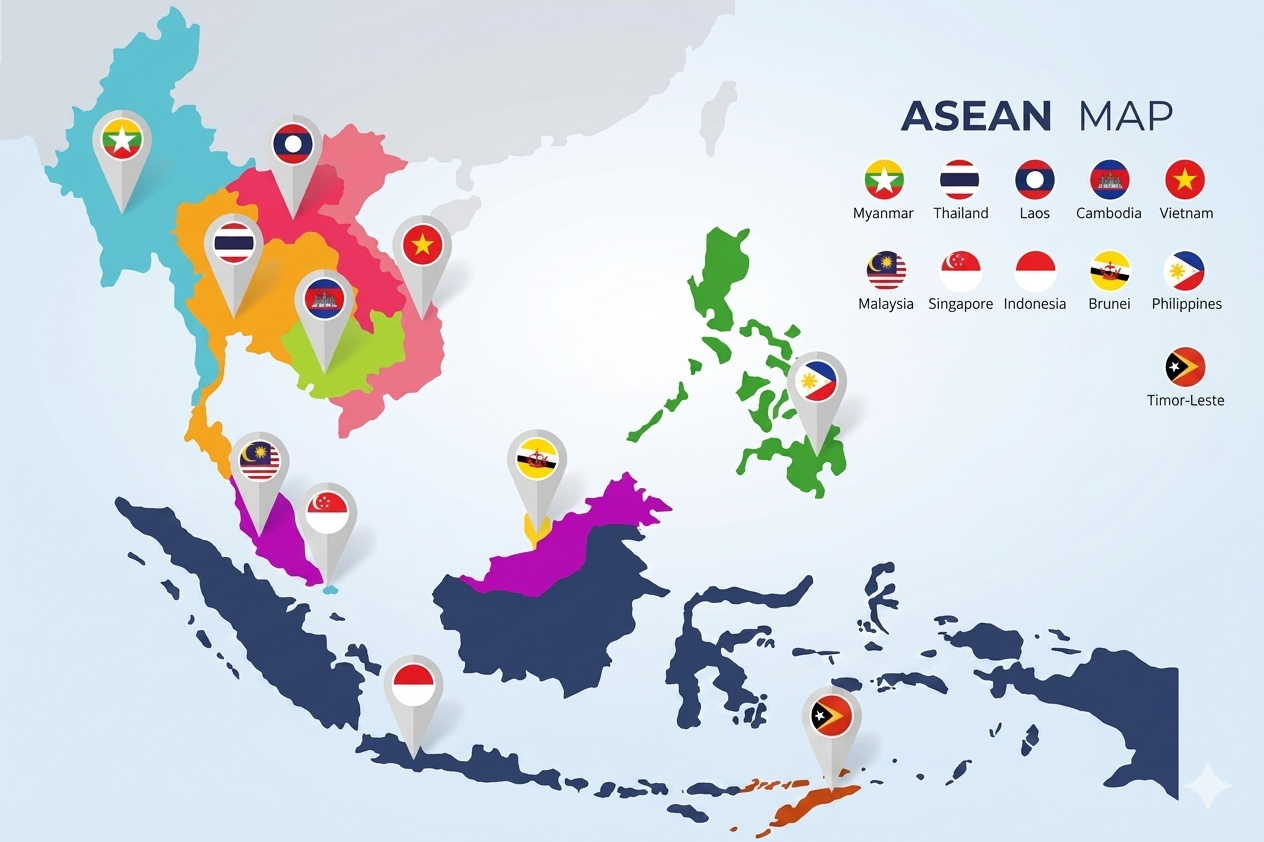
Operational Region
The EIP works directly with the ASEAN Secretariat and sectoral bodies as well as with individual ASEAN Member States.
Frequently Asked Questions
Find answers to the most common questions about EIP.
Our Pillars

Regulatory Reform
The Regulatory Reform pillar focuses on strengthening regulatory and standards systems across ASEAN Member States to make them more efficient, predictable and fit for purpose. The work aims to reduce unnecessary bureaucracy, create a more stable environment for business investment, and strengthen protections for workers and consumers particularly for micro, small and medium-sized enterprises (MSMEs). Digital reform is a key cross‑cutting priority.

Open Trade
This Open Trade pillar seeks to lower barriers to trade (goods and services) between ASEAN Member States and with the rest of the world, particularly for MSMEs and trade digitalisation.

Financial Services
This Financial Services pillar aims to enable greater financial resilience and increase economic opportunities for individuals and businesses in AMS through wider availability of useful, affordable, and inclusive financial services, particularly for small businesses (MSMEs) and women.
